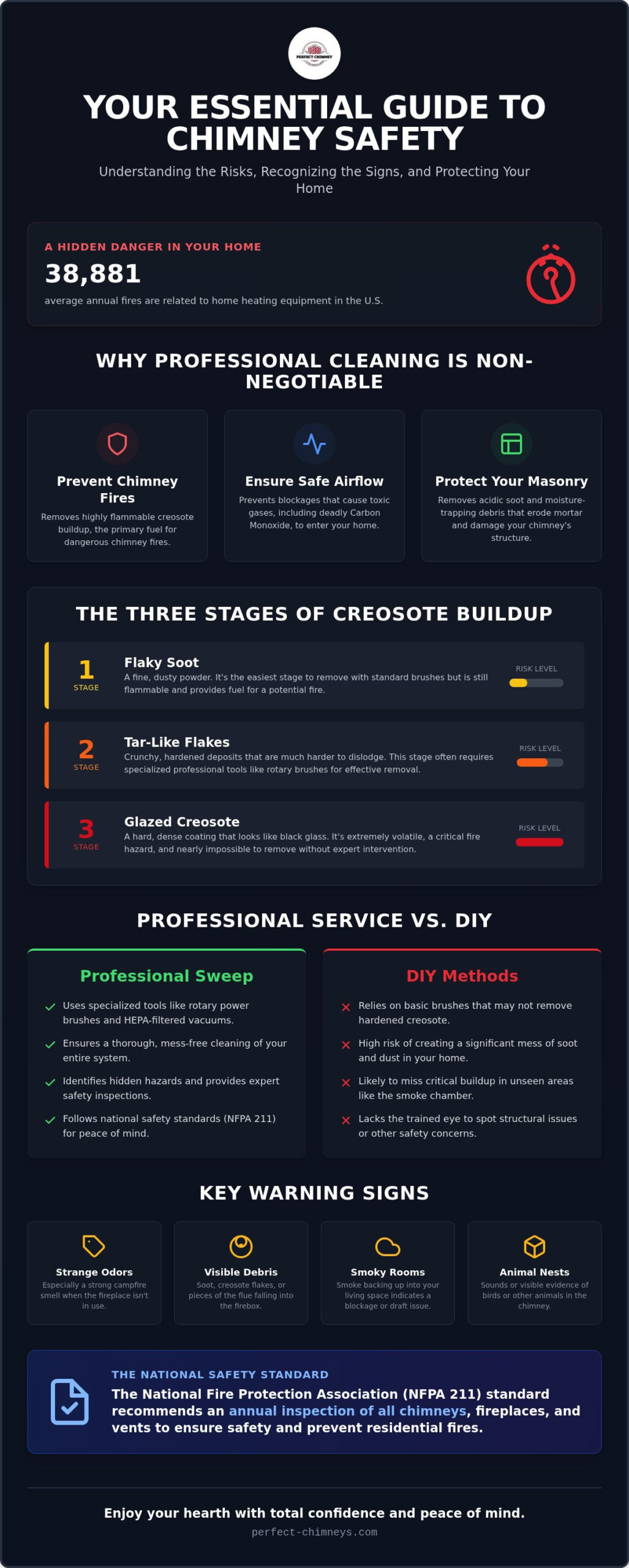
Did you know that an average of 38,881 fires related to home heating equipment occur every year in the United States? While your fireplace is a source of comfort, it is natural to feel a sense of unease about hidden hazards or the potential mess that a professional chimney cleaning might leave behind. You deserve to enjoy your hearth with total confidence rather than lingering questions about safety, soot, or the long-term health of your home’s masonry.
This guide will show you why expert maintenance is the single most important safety measure for your property and how to identify the subtle signs that your system needs attention. We’ll demystify the 2024 NFPA 211 standards that recommend annual inspections and clarify the specific needs for both gas and wood-burning systems. By understanding the process and the importance of removing hazardous creosote, you can ensure a season of warmth while preventing the need for expensive repairs down the road.
Key Takeaways
- Understand why professional chimney cleaning is essential for the safe ventilation of combustion byproducts and the prevention of hazardous creosote buildup.
- Learn to recognize the critical warning signs that indicate your flue requires immediate attention, from strange odors to visible debris.
- Discover how specialized tools like rotary power brushes and HEPA-filtered vacuums ensure a thorough cleaning without leaving a mess in your home.
- Explore the national safety standards that recommend annual inspections to safeguard your home against the effects of weather, animals, and structural settling.
- Gain peace of mind by learning how a comprehensive maintenance plan preserves your masonry and enhances the long-term value of your property.
Understanding Chimney Cleaning: More Than Just Removing Soot
Professional chimney cleaning involves much more than simply brushing away visible soot. It is a meticulous process designed to remove creosote, ash, and external debris like bird nests or leaves from your home’s ventilation system. The fundamental goal is to ensure that combustion byproducts, including smoke and toxic gases, can exit your living space safely and efficiently. By maintaining a clear path, you protect your indoor air quality and ensure your fireplace operates at its peak performance.
When homeowners ask, “What is a chimney sweep?” they are often looking for more than a person with a brush. They are seeking a technician who understands how the firebox, damper, smoke chamber, and flue liner work together to protect the home. A thorough cleaning provides the reassurance that your fireplace is a safe asset rather than a hidden hazard.
The Functional Anatomy of a Residential Chimney
Your chimney is a complex system of interconnected parts. The flue liner is perhaps the most critical component; it acts as a heat-resistant barrier that protects your home’s combustible wood framing from the intense temperatures inside the chimney. Just above the firebox, the smoke chamber funnels exhaust into the flue. Because of its slanted shape, this area is a common site for dangerous creosote buildup. Finally, the damper regulates the draft. If it’s coated in grime, it won’t seal properly, leading to energy loss and poor airflow during a fire.
Why Cleaning is a Non-Negotiable Safety Standard
Safety is the driving force behind every service visit. Preventing chimney fires is the highest priority for any homeowner. Creosote is highly flammable, and even a thin layer can ignite under the right conditions. Beyond fire risks, an obstructed flue can cause carbon monoxide to back up into your living room. This odorless, colorless gas is a silent threat that only a clear ventilation path can prevent.
Regular chimney cleaning also supports the structural integrity of your masonry. By removing acidic soot and moisture-trapping debris, you prevent the slow erosion of your chimney’s interior. This proactive care helps you avoid the need for major repairs and ensures your fireplace remains a reliable part of your home for decades. It is a simple step that offers significant protection for your family and your property’s long-term value.
The Danger of Creosote: Why Your Chimney Needs Regular Care
Creosote is more than just a messy byproduct of a cozy evening. It is a complex substance that forms when wood smoke, which contains unburned gases and tar droplets, cools as it travels up your chimney. This condensation process turns vapor into a sticky, highly flammable solid that clings to your flue walls. Without regular chimney cleaning, this layer continues to thicken, creating a cycle of restricted airflow and increased accumulation. As the passage narrows, smoke stays in the flue longer, which only accelerates the buildup of these dangerous deposits.
The danger often lies in what you cannot see. While the firebox might look clear, significant deposits often hide in the smoke chamber or behind the damper. This is why safety organizations emphasize the risks of neglect. A chimney fire safety alert from the CPSC notes that these hidden fuels are a primary cause of thousands of residential fires annually. Understanding how this substance develops is the first step in maintaining a safe home environment.
The Three Stages of Creosote Development
Creosote evolves in stages, each presenting a different level of risk and requiring different removal techniques. Stage 1 appears as a fine, flaky soot. While it is the easiest to remove with standard brushes, it still provides the initial fuel for a flash fire. Stage 2 looks like crunchy, tar-like flakes. It is harder to dislodge and typically requires specialized professional tools to clear effectively. Stage 3 is the most critical hazard. It appears as a hard, glazed coating that looks like black glass. It is extremely volatile and nearly impossible for a homeowner to remove without expert intervention.
How Your Burning Habits Affect Buildup Rates
The way you manage your fire directly impacts how fast your chimney becomes dangerous. Burning “green” or unseasoned wood is a common mistake. Because this wood is full of moisture, it burns at a lower temperature and produces more smoke. That smoke cools rapidly, leading to heavy creosote deposits. Similarly, smoldering fires that are “choked down” for long periods create the perfect environment for condensation. High-efficiency inserts burn wood more completely, but they still produce some residue that can accumulate over time.
Ensuring your system is clear is the best way to protect your home’s long-term value and your family’s safety. If you aren’t sure about the current state of your flue, a professional can identify potential hazards before they become emergencies. Proactive care ensures that your fireplace remains a source of warmth rather than a structural risk.
Professional Chimney Sweeping vs. DIY Methods
It is a common misconception that a homeowner can simply “brush out” a flue with a kit from a local hardware store. While the DIY spirit is admirable, chimney cleaning is a specialized trade that requires more than just a basic scrub. A professional service provides a level of thoroughness and technical oversight that a casual cleaning cannot match. When you hire an expert, you aren’t just paying for the removal of soot; you’re investing in a comprehensive safety check that protects your property and your family.
One of the most significant differences between a DIY attempt and a professional visit is the integration of a detailed inspection. A homeowner might clear some loose ash, but they rarely have the training to spot a hairline fracture in a masonry crown or a failing flue liner. These structural issues are often the root cause of house fires. Improper cleaning techniques can also push debris into hard-to-reach areas like the smoke shelf, creating a secondary fire hazard that remains hidden from view.
For those in the Kansas City region, choosing a dedicated provider like Best Chimney Services ensures that these subtle signs of wear are identified and addressed before they lead to serious damage.
The Specialized Tools of the Trade
The equipment used by a professional team is designed to handle the unique challenges of soot and creosote without compromising your indoor environment. Industrial-grade, HEPA-filtered vacuums are essential. They capture fine particles that standard household vacuums would simply blow back into your living room. Along with these powerful vacuums, technicians use rotary power brushes that can navigate the bends and offsets of a modern flue more effectively than a rigid hand brush.
Perhaps the most vital tool in a professional’s kit is the video inspection camera. This allows the technician to perform a “closed-circuit” scan of the entire interior of your chimney. By viewing the flue liner in high definition, they can identify hidden cracks, gaps in mortar joints, or early signs of water damage that are invisible from the hearth or the roofline.
The Risks of Incomplete Maintenance
DIY methods often fail to address the most dangerous forms of buildup. As mentioned earlier, Stage 3 creosote is a hard, glazed substance that is extremely volatile. Standard brushes will simply bounce off this glazed “fuel,” leaving the most significant fire risk untouched. Professionals use specialized chemical treatments or mechanical scrapers to safely remove this glaze without damaging the underlying structure.
There is also the matter of liability. Many homeowners insurance policies require proof of professional maintenance in the event of a claim related to a chimney fire. If a fire occurs and the investigation reveals that the system was maintained using improper DIY equipment, your coverage could be at risk. Choosing a professional chimney cleaning ensures that the work is documented, the equipment is appropriate for the job, and your home remains fully protected.
When to Schedule Service: Frequency and Warning Signs
The National Fire Protection Association (NFPA) 211 standard provides a clear directive for homeowners: all chimneys, fireplaces, and vents should be inspected at least once a year. While many believe that chimney cleaning is only necessary after heavy use, the reality is that the passage of time can be just as impactful as the number of fires you’ve burned. Environmental factors like nesting animals, severe weather, and the natural settling of your home’s foundation can all create obstructions or structural gaps that a simple visual check from the hearth won’t reveal.
Choosing the right time for your appointment can save you from the stress of the peak season “Fall rush,” which typically occurs between October and February. Scheduling your service during the Spring or Summer months ensures you have plenty of time to address any discovered repairs before the first cold snap. This proactive approach guarantees that your system is ready to go the moment you want to light that first fire of the season. It also allows for any masonry work or waterproofing to cure properly in warmer weather.
Standard Maintenance Intervals for Modern Homes
For those who enjoy regular wood-burning fires, a good rule of thumb is to seek a cleaning after burning approximately 1 to 2 cords of wood. This volume typically produces enough residue to warrant a professional sweep. Gas fireplaces are not exempt from this schedule; they require annual inspections to check for bird nests, spider webs, or internal debris that can block proper venting. Adopting an “Annual Safety Check” philosophy protects your home’s integrity regardless of whether you burned a single log or kept the hearth busy all winter long.
Red Flags: Identifying Issues Before They Escalate
Your fireplace will often tell you when it’s overdue for attention. Be alert for these specific indicators:
- Unusual Odors: A persistent smell of a stale campfire or “dirty gym socks” coming from the firebox, especially during humid weather, indicates a heavy accumulation of creosote.
- Visible Debris: If you notice flakes of soot dropping into the firebox or black, oily spots appearing on the walls of the flue, your system has reached a critical stage of buildup.
- Drafting Problems: Difficulty getting a fire to start or smoke backing up into the room suggests a blockage or a malfunctioning damper that requires immediate professional care.
If you notice any of these signs, don’t wait for the temperature to drop. You can schedule your chimney inspection today to ensure your home remains safe and your fireplace operates efficiently all year round.
The Perfect Chimney Approach to Total System Care
At Perfect Chimney, we view chimney cleaning as just one part of a total system protection plan. While removing soot is vital, our goal is to ensure the long-term functional integrity of your entire fireplace. This means our technicians don’t just look at the debris; they look at the health of your masonry and the effectiveness of your moisture protection. By integrating cleaning with proactive measures like chimney waterproofing or tuckpointing, we help you avoid expensive structural repairs that often stem from simple neglect.
Our approach is rooted in quiet competence and a genuine commitment to your home’s safety. We believe in clear, neighborly communication, so you’ll always receive a detailed explanation of our findings. Whether we’re performing a gas fireplace cleaning or a complex wood-burning flue sweep, our meticulous attention to detail ensures your system is ready for the burning season. We treat your living space with the same respect we’d show our own homes, ensuring a clean, stress-free experience from start to finish.
What to Expect During a Professional Cleaning Visit
A standard service visit follows a methodical process to ensure both cleanliness and safety. First, we prioritize your home’s interior by setting up heavy-duty drop cloths and high-velocity dust containment systems. This prevents any fine ash or soot from escaping the hearth area. Once the workspace is secure, we perform the physical sweep of the flue, smoke chamber, and firebox using specialized rotary brushes. This mechanical action dislodges creosote and debris while our industrial vacuums capture it instantly.
The final stage is a multi-point visual inspection. We examine the chimney crown for cracks, ensure the chimney cap is secure, and check the exterior masonry for signs of water intrusion or mortar deterioration. This thorough evaluation provides you with a clear picture of your system’s health, allowing you to make informed decisions about your home’s maintenance.
During this roof-level assessment, it is also the perfect time to evaluate the state of your roofing materials; you can explore GAF Timberline HDZ Shingles to discover how high-performance roofing can provide an extra layer of security for your home.
Preparing Your Home for a Seamless Service
To ensure our visit is as efficient as possible, there are a few simple steps you can take to prepare your space. We ask that you stop using your fireplace at least 24 hours before your scheduled chimney cleaning. This allows the system to cool completely, ensuring the safety of our technicians and the effectiveness of our equipment. It’s also helpful to move any fragile items, holiday decorations, or furniture away from the hearth area to provide a clear, safe workspace.
We also recommend keeping pets and small children in a separate area of the home during the service. While we take every precaution to contain dust, our high-velocity equipment can be loud; a clear floor area helps us maintain our high standard of workmanship. By following these small steps, you help us provide the meticulous care your home deserves. If you’re ready to secure your peace of mind for the coming winter, contact us to schedule your comprehensive safety evaluation today.
Securing Your Home’s Warmth and Safety
Maintaining a safe and efficient fireplace is a journey that starts with awareness and ends with expert care. By adhering to the NFPA 211 standards for annual inspections and understanding the progressive dangers of creosote, you’ve taken the first steps toward protecting your home’s longevity. Professional chimney cleaning isn’t just a seasonal chore; it is a vital health check for your ventilation system that prevents invisible hazards like carbon monoxide backup and structural erosion. Our approach ensures that every component, from the flue liner to the masonry crown, remains in peak condition.
Whether you require expert masonry restoration and waterproofing or comprehensive gas fireplace maintenance, our team is dedicated to providing meticulous workmanship with a neighborly touch. We focus on the technical details so you can focus on the comfort of your hearth. Don’t wait for the first frost to discover a hidden issue. Schedule Your Professional Chimney Safety Inspection and Cleaning with Perfect Chimney to ensure your system is ready for the months ahead. We look forward to being your trusted partner in home safety and helping you enjoy total peace of mind this burning season.
Common Questions About Chimney Maintenance
How much does a standard chimney cleaning cost?
The cost of a professional service depends on several factors, including the type of fireplace you own and the current condition of your flue. A wood-burning system with heavy creosote buildup typically requires more time and specialized equipment than a routine gas fireplace maintenance visit. To get an accurate figure for your home, it’s best to request a detailed quote that includes both the physical cleaning and a thorough safety inspection.
How long does a professional chimney sweeping take?
A standard professional cleaning usually takes between 45 and 90 minutes to complete. This timeframe allows the technician to set up dust containment systems, perform the physical sweep of the flue, and conduct a multi-point visual inspection of the masonry and components. If your system hasn’t been serviced in many years or has structural issues, the process might take slightly longer to ensure every hazard is properly addressed.
Do gas fireplaces really need to be cleaned if there is no wood smoke?
Yes, gas fireplaces require annual attention even though they don’t produce the same soot as wood-burning units. While you won’t find creosote, these systems can still be obstructed by bird nests, cobwebs, or debris that falls from a deteriorating chimney crown. An annual gas fireplace cleaning ensures that the burners and venting system remain clear, which is essential for preventing the backup of carbon monoxide into your home.
Can I clean my own chimney with a kit from the hardware store?
While DIY kits are available, they often lack the power and precision required for a truly safe result. Standard consumer brushes often fail to reach the smoke shelf or remove hardened, glazed creosote that poses the highest fire risk. More importantly, a DIY approach skips the professional inspection, which is the only way to identify hidden cracks or structural failures in your flue liner that could lead to a house fire.
Will chimney cleaning make a mess in my living room?
A professional chimney cleaning should never leave a mess in your living space. Expert technicians use high-velocity HEPA vacuums and industrial-grade drop cloths to contain every particle of soot and ash at the source. By creating a sealed environment around the hearth before they begin the sweep, professionals ensure that your furniture, carpets, and indoor air quality remain completely undisturbed throughout the process.
What is the difference between a chimney inspection and a cleaning?
A cleaning is the physical removal of soot and debris, while an inspection is a technical evaluation of the system’s safety and structural integrity. During an inspection, a technician uses specialized cameras to look for cracks, gaps in mortar, or water damage that could compromise the chimney. Most reputable service providers include a visual inspection as part of their standard cleaning package to provide a complete picture of your home’s safety.
What happens if I never clean my chimney?
Neglecting your chimney leads to a dangerous accumulation of creosote, which is the primary fuel for residential chimney fires. Over time, the acidic nature of soot can also eat away at the mortar joints and the flue liner, leading to structural instability and expensive masonry repairs. Eventually, the flue may become so restricted that toxic combustion byproducts are forced back into your living room instead of exiting through the roof.
Is it okay to use ‘chimney cleaning logs’ instead of a professional sweep?
Cleaning logs are not a substitute for a professional sweep and inspection. While these logs contain chemicals that can help flake away some creosote, they don’t actually remove the debris from your system. The loosened soot often falls and collects on the smoke shelf or behind the damper, which can actually increase the risk of a fire. Only a physical sweep can safely remove these materials and ensure the flue is clear.