For homeowners in Portland, Oregon, and across the surrounding communities from Beaverton to Vancouver, WA, a gas fireplace is more than just a source of heat—it’s the heart of the home during our long, damp winters. But the convenience and beauty of a gas fireplace come with a critical responsibility: regular maintenance. Our comprehensive professional guide will show you how to maintain your gas fireplace for peak efficiency, safety, and longevity, ensuring your family stays warm and safe all season long.
Table of Contents
Understanding Why Gas Fireplace Maintenance is Essential in 2026
One of the most common misconceptions we hear from homeowners in Hillsboro and Lake Oswego is that gas fireplaces are “maintenance-free.” While they are certainly lower maintenance than wood-burning fireplaces, they are not zero-maintenance. Gas units are sophisticated appliances that produce chemical residues, attract dust, and have mechanical parts that wear down over time. Ignoring them is not just a cosmetic issue; it’s a safety risk.
Regular cleaning and inspection are essential for three key reasons: safety, efficiency, and aesthetics. Neglecting your unit can lead to poor performance, higher energy bills, and dangerous conditions. Dust, pet hair, and other household debris can clog burners and pilot light assemblies, impacting performance and even affecting your home’s indoor air quality. Furthermore, incomplete combustion can create soot and carbon monoxide, posing a serious threat to your family’s health.
The Hidden Risks of Neglect
The biggest concern with any fuel-burning appliance is safety. Here in the Pacific Northwest, where we rely on our heating systems for months on end, these risks are amplified.
While fireplace maintenance is a specialized task, keeping your home’s primary heating and plumbing systems in top condition is just as vital; for professional support in these areas, learn more about Anton Plumbing Heating & Cooling.
- Carbon Monoxide Concerns: A properly functioning gas fireplace produces negligible amounts of carbon monoxide (CO). However, if the venting system is blocked by debris like leaves or a bird’s nest—a common issue in our heavily treed neighborhoods—or if ceramic logs are cracked and misplaced, the combustion process can be compromised. This can lead to the production and release of this odorless, colorless, and deadly gas into your home.
- Soot Buildup on Logs: If you see black soot accumulating on your ceramic logs, it’s a clear warning sign. This isn’t normal residue; it indicates a problem with the fuel-to-air ratio. The flame is not burning cleanly, which wastes fuel and is often a precursor to more significant safety hazards.
- The Cost of Procrastination: Many costly repairs can be avoided with routine maintenance. A simple professional cleaning, which might cost a couple of hundred dollars, can prevent the buildup that damages sensitive components. For example, a clogged burner orifice or a failing thermopile can lead to a complete gas valve failure—a repair that can easily cost over $2,000.
Chemical Residue and the “White Film” Mystery
Does the glass on your fireplace have a stubborn, cloudy white film that just won’t wipe away? This is a frequent complaint we address for clients in Tigard and Gresham. This film is a byproduct of combustion.
- What Causes the Film: Natural gas contains trace amounts of sulfur, which, when burned, can combine with moisture in the air to form sulfuric acid residue on the glass. Over time, these mineral deposits bake onto the surface, creating that hazy, white appearance.
- Why Standard Cleaners Don’t Work: Reaching for a standard ammonia-based glass cleaner like Windex is a critical mistake. The ammonia can react with the high heat and mineral deposits, permanently etching and fogging the specialized ceramic glass. This damage is irreversible and requires a complete, costly glass replacement. Only a specialized, non-ammonia fireplace glass cream should be used.
* The Role of Minerals: The minerals and additives present in your home’s air—from cleaning products, humidifiers, or even new carpet fumes—can also contribute to this buildup, accelerating the process.
The Anatomy of a Clean Gas Fireplace: What Needs Attention?
A thorough gas fireplace service goes far beyond a simple dusting of the logs. It involves a detailed inspection and cleaning of numerous interconnected components that ensure your fireplace operates safely and efficiently. As seasoned professionals serving the greater Portland area, we know exactly where to look for potential problems.
- Log Placement and Condition: The ceramic logs in your fireplace are specifically designed and placed to ensure proper flame distribution and venting. If they are moved, cracked, or deteriorating, they can cause dangerous “flame ghosting,” where flames lick up the back of the firebox and potentially damage internal components or create soot.
- Venting Systems: Whether you have a direct vent system or a B-vent, the exterior cap must be clear of obstructions. We frequently find bird nests, wasp nests, leaves, and other debris blocking vents, which is a critical safety hazard that restricts exhaust flow.
- The Burner Tray and Orifice: The burner is where the gas and air mix for combustion. Dust, pet dander, and even tiny spiders can clog the burner ports and the main gas orifice. This obstruction disrupts the gas flow, leading to a weak, noisy, or uneven flame. A clean burner ensures a steady, efficient blue-and-yellow flame.
Cleaning the Glass and Exterior
A crystal-clear glass door not only looks better but also allows the maximum amount of radiant heat to warm your room. Cleaning it properly is a multi-step process.
- Safety First: Before you begin, turn off the gas supply to the fireplace at the wall valve and ensure the pilot light is extinguished and the unit is completely cool.
- Remove the Barrier and Glass: Carefully remove the front safety barrier screen. Then, unlatch the glass assembly. Most units have spring-loaded clamps or levers at the top and bottom. Place the glass on a soft towel to prevent scratching.
- Use the Right Cleaner: Apply a small amount of a recommended, ammonia-free fireplace glass cleaner or cream to a soft cloth. Work in a circular motion to gently scrub away the white film and any soot. Wipe away the residue with a clean, damp cloth, and then buff dry with a microfiber towel.
- Polish the Exterior: Use a separate clean cloth to dust and polish the metal louvers, frame, and any exterior trim to restore its original luster.
Inspecting the Pilot Assembly and Ignition
The pilot assembly is the brain of your fireplace’s safety system. It’s a small but vital component that requires careful attention.
- The Thermocouple and Thermopile: These are safety sensors that sit in the pilot flame. The thermocouple signals the gas valve to stay open when a flame is present and to shut off if the pilot goes out, preventing gas leaks. The thermopile generates a small amount of electricity to operate the gas valve, especially in models that work during a power outage.
- Cleaning the Pilot Hood: Over time, a fine layer of carbon can build up on the pilot hood and sensors. This buildup can insulate the sensors from the flame, causing them to send a false signal that the pilot is out. The result? The fireplace shuts off unexpectedly. A technician will gently clean this buildup to ensure a reliable connection.
- Testing the Igniter: The spark igniter creates the spark that lights the pilot. We test it to ensure it produces a strong, consistent spark close to the pilot hood for quick and reliable ignition every time.
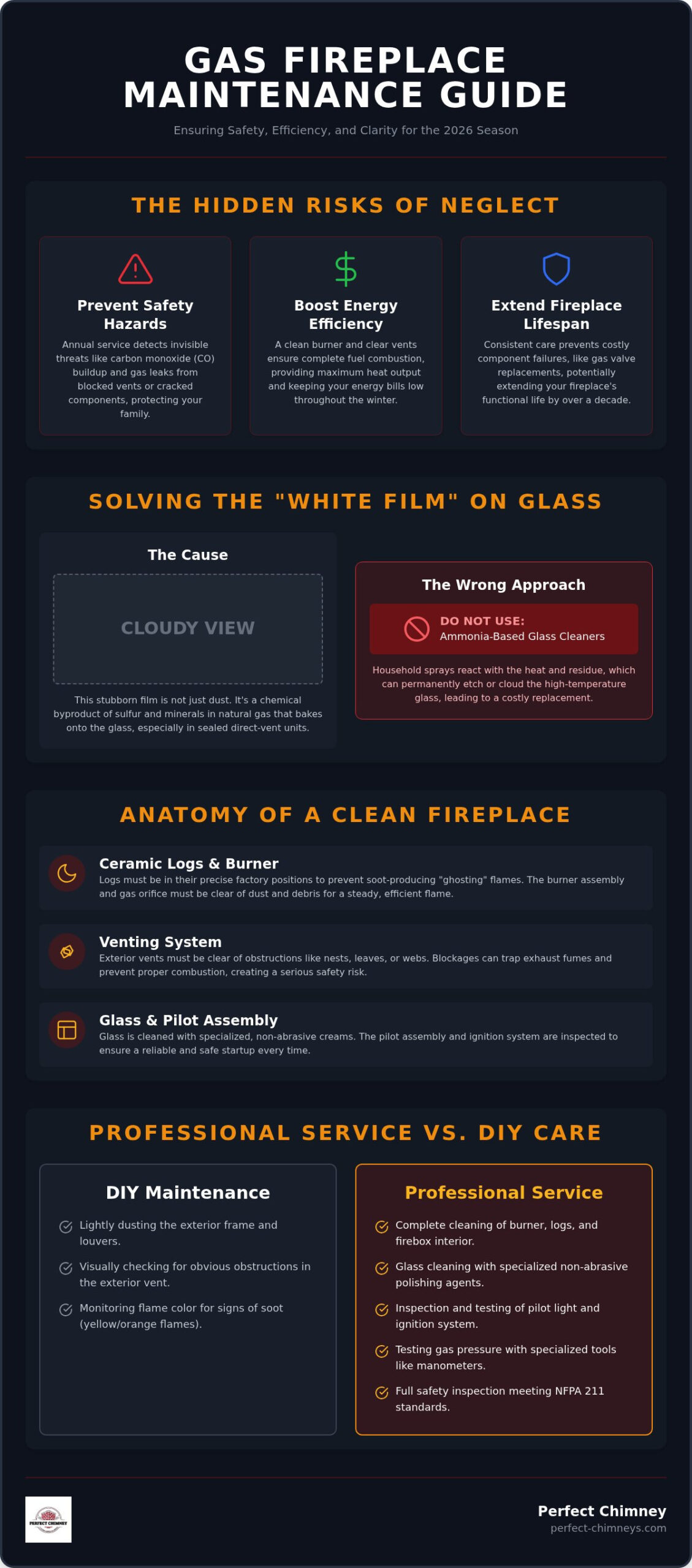
Professional Gas Fireplace Service vs. DIY Maintenance
While homeowners can perform basic cosmetic cleaning, any work involving the internal gas components should be left to a licensed and certified technician. In Portland and Vancouver, WA, safety regulations are strict for a reason. Working with gas lines without proper training is incredibly dangerous and can have severe consequences.
A homeowner can safely wipe down the exterior, clean the outside of the glass (once removed), and ensure the area around the fireplace is clear. However, a professional service from a company like Perfect Chimney is a different level of care.
- Specialized Tools: Our technicians use tools the average homeowner doesn’t own, such as manometers to measure gas pressure and electronic gas leak detectors (“sniffers”) to find leaks that are undetectable by smell alone.
- Warranty and Insurance: Performing DIY repairs on gas components can void your manufacturer’s warranty. More importantly, if an unlicensed repair leads to a fire or other damage, your homeowner’s insurance claim could be denied.
- A Safety-First Mindset: Our guiding principle is simple: when in doubt, turn off the gas and call a professional. The safety of your home and family is not worth the risk of a DIY mistake.
When to Call a Professional Immediately
Certain signs indicate an immediate need for professional service. If you notice any of the following, shut off the gas supply to the fireplace and call Perfect Chimney for service in the Portland metro area.
- The Smell of Gas: Natural gas is odorless, so utility companies add a chemical called mercaptan to give it a distinct “rotten egg” smell. If you smell this, you have a gas leak. Do not operate any electrical switches, leave the house immediately, and call your gas company and a professional from a safe location.
- Pilot Light Issues: If the pilot light won’t stay lit or is burning with a weak, yellow, or wavering flame, it’s a sign of a problem with the gas flow or the thermocouple.
- Visible Damage: If you see significant cracks in the glass panel or large, crumbling pieces falling off your ceramic logs, the unit should not be operated until it’s been inspected.
The Professional Inspection Checklist
When a Perfect Chimney technician visits your home in Beaverton or beyond, they perform a comprehensive 21-point safety inspection that includes:
- Checking and adjusting the gas pressure to manufacturer specifications.
- Cleaning the pilot orifice and burner assembly to ensure a clean, efficient flame.
- Testing the thermocouple, thermopile, and ignition system.
- Cleaning the firebox, logs, and glass with professional-grade products.
- Inspecting the venting system for blockages and proper drafting.
- Testing all safety controls, wall switches, and remote controls.
- Checking for gas leaks at all connections within the unit.
Your Annual Gas Fireplace Maintenance Schedule
To keep your fireplace in top condition, we recommend a simple maintenance schedule tailored to our unique Pacific Northwest seasons.
- Pre-Season (Early Fall): Before the rainy season begins in earnest, schedule your professional deep cleaning and safety inspection. This is the most important step to ensure your fireplace is ready for heavy use.
- Mid-Season (Winter): As you use your fireplace, perform simple visual checks. Wipe down the exterior to keep dust from being pulled into the unit. If you notice any changes in flame appearance or performance, make a note to call for a check-up.
- Post-Season (Spring): Once the cold weather breaks, it’s a good time to shut down the pilot light for the summer to save on gas. This is also a good time to check the exterior vent cap for any debris that may have accumulated over the winter.
- Off-Season (Summer): To prevent the gas valve from sticking due to inactivity, it’s a good practice to turn on the fireplace for 10-15 minutes once a month during the summer. This keeps the internal components lubricated and ready for fall.
Seasonal Preparation and Shutdown
Properly preparing your fireplace for the off-season is just as important as getting it ready for winter.
- Turning Off the Gas: To turn off the pilot for the summer, locate the gas valve (usually a red or blue knob near the unit or a key in the floor/wall). Turn it to the “OFF” position. This will save you an average of $10-$15 per month in gas consumption.
- Checking Vents: Spring is an active time for birds and insects. Do a quick visual inspection of the exterior vent cap to ensure no new nests have been built.
Troubleshooting Common Performance Issues
Some minor issues can be addressed by the homeowner.
- “Booming” Sound on Ignition: This is called delayed ignition and is often caused by a dirty pilot or burner that allows gas to build up before it lights. It’s a sign that a professional cleaning is needed.
- Lazy, Yellow Flame: If your flame is mostly yellow and sooty instead of a mix of blue and yellow, the air shutter may need adjustment. This is a task for a professional, as an improper mix can lead to carbon production.
- Remote Control Failure: Before calling for service, check the batteries. Most gas fireplace systems have batteries in both the handheld remote and a receiver box located in or near the fireplace itself.
Long-Term Benefits of Regular Fireplace Care
Investing in annual professional maintenance for your gas fireplace is one of the smartest decisions you can make as a homeowner in the Portland area. The benefits extend far beyond a clean-looking unit.
- Extend the Lifespan: A well-maintained gas fireplace can easily last 20 years or more. Regular service prevents the premature failure of key components like the gas valve, blower, and pilot assembly.
- Improve Heating Efficiency: A clean burner and a clear glass door mean you get more heat from the gas you burn. This translates directly into lower energy bills during our long heating season.
- Maintain Home Value: A safe, beautiful, and fully functional fireplace is a major selling point in the competitive Portland and Vancouver real estate markets.
- Peace of Mind: The most significant benefit is knowing that your fireplace is operating safely, protecting your family from the risks of gas leaks and carbon monoxide.
While maintaining your fireplace is a key part of home care, don’t overlook other high-impact areas like your kitchen; if you are planning a refresh, you can visit Cabinet Painting Denver to learn how professional refinishing can modernize your cabinets.
Enhancing Efficiency and Lowering Costs
A clean fireplace is an efficient fireplace. When burners are clean, they mix air and fuel perfectly, producing the maximum amount of heat with minimal waste. The primary way gas fireplaces warm a room is through radiant heat, which travels in a straight line from a hot surface to warm objects in its path. A clean glass door is essential because it allows this radiant heat to pass through into your living space, whereas a dirty, filmed-over glass will block it, trapping valuable heat inside the firebox.
Professional Solutions with Perfect Chimney
At Perfect Chimney, we are your trusted local experts for comprehensive gas fireplace service, including cleaning, inspection, and repair. Our certified technicians are committed to the highest national safety standards, ensuring every job we do in Portland, Beaverton, Hillsboro, Tigard, Lake Oswego, Gresham, and Vancouver, WA, is done right.
Don’t wait for a small problem to become a costly, dangerous one. Protect your investment and your family with a professional tune-up.
Schedule your 2026 gas fireplace cleaning with Perfect Chimney today!
Frequently Asked Questions
Do gas fireplaces really need to be cleaned if they don’t burn wood?
Yes. While they don’t produce creosote like wood fireplaces, they do create combustion byproducts that can coat the glass, logs, and sensors. More importantly, dust, pet hair, and other debris can clog critical components, affecting safety and performance.
What should I do if my gas fireplace smells like rotten eggs?
This smell indicates a gas leak. Do not turn any lights or appliances on or off. Immediately evacuate your home, and from a safe distance, call your local gas utility’s emergency line and then a certified professional like Perfect Chimney.
How often should I have my gas fireplace professionally inspected?
All major manufacturers and safety organizations, including the National Fire Protection Association (NFPA), recommend a professional inspection and cleaning at least once a year. Given the heavy use fireplaces see in the Pacific Northwest, an annual service is essential.
Can I clean the white film off my gas fireplace glass with Windex?
No, you should never use Windex or any other ammonia-based cleaner. The ammonia can react with the heat and permanently etch the ceramic glass. Use only a cleaner specifically formulated for gas fireplace glass.
Why does my gas fireplace keep turning off by itself?
The most common cause is a dirty or faulty thermocouple or thermopile. When the sensor gets coated in soot, it can’t detect the pilot flame correctly and automatically shuts off the gas as a safety measure. This requires professional cleaning or replacement.
Is it safe to leave the pilot light on all year round?
It is generally safe, but it’s not necessary and wastes a small amount of gas. Leaving it on can help keep the firebox dry and prevent spiders from building webs in the orifice, but shutting it off in the spring and re-lighting it in the fall is the most common and cost-effective practice.
How much does a professional gas fireplace cleaning typically cost?
The cost for a professional cleaning and inspection in the Portland metro area can vary depending on the specific model and any issues found. However, it’s a minor investment compared to the cost of a major repair or the value of your family’s safety. Contact Perfect Chimney for a precise quote.
What are the signs that my gas fireplace ceramic logs are cracked or damaged?
Look for visible cracks, crumbling, or excessive sooting on the logs. Damaged logs can disrupt the flame pattern, leading to incomplete combustion and potential safety hazards. If you see this, it’s time to have them inspected and possibly replaced.